A real investigation
Could a family story about a disappearance at sea be tested?
Lucy grew up knowing that her aunt June and the child’s nurse had disappeared from a passenger ship in 1935. The family also carried a disturbing explanation. She wanted to know what the surviving records could prove, and where it had happened.
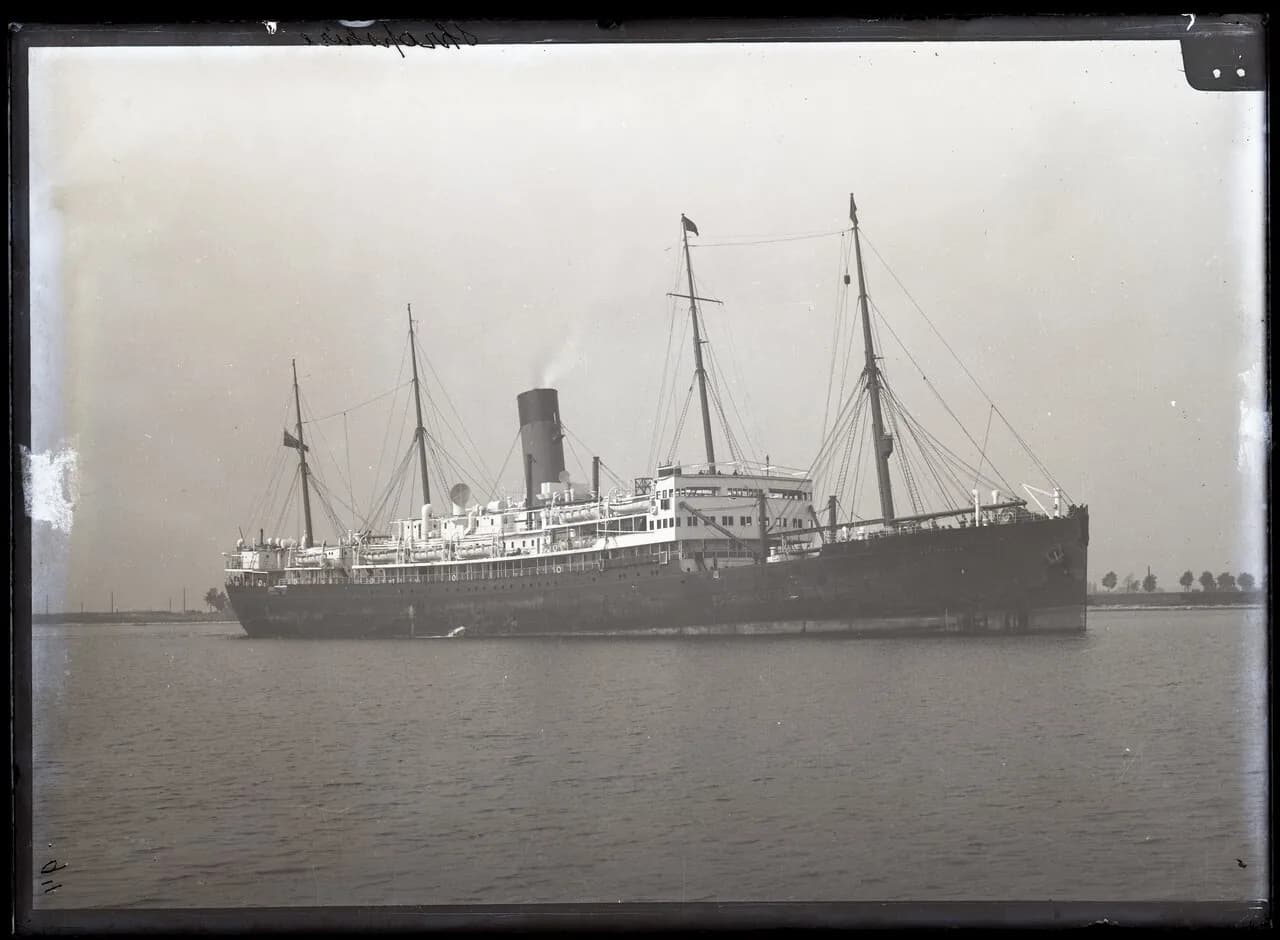
- The person
- June Cameron, aged 21 months
- The event
- A disappearance from the liner Shropshire
- The date
- Sunday 4 August 1935
- The result
- A 30-page sourced investigation
Published with the family’s permission. This public case study uses the findings and citations from the investigation. It does not reproduce subscription records or archive images whose separate publication rights have not been cleared.
01 / The question
The family knew the outline. Could the record supply the detail?
Lucy’s account placed her grandparents, their children and a nurse on a voyage back towards Malaya. It said that June and the nurse disappeared, and that a suitcase filled with rocks revealed a planned murder-suicide.
The research task was not to retell that account as fact. It was to identify the voyage, find contemporary evidence, reconstruct the family around it and mark the exact point where documentation gave way to memory.
“Did records survive, and could the place where it happened be identified?”
02 / Reconstructing the event
Several small records formed one defensible chronology.
- 17 September 1934
Passenger indexes place John Austen Cameron, Margaret Elizabeth Cameron, Anne and June together on the Oxfordshire, arriving in London from Rangoon.
- 2 August 1935
An outward index places the family on the Shropshire, bound towards Colombo. June appears to have been mistranscribed as “Jane” in the index.
- 4 August 1935
Contemporary reports state that June and her Chinese nurse disappeared at lunchtime off the Pembroke coast. The ship stopped and searched without finding them.
- After the event
Later records revealed the family’s return to Malaya, distinguished wartime experiences and a medical tradition spanning three generations.
03 / The findings
What the evidence could, and could not, support.
The value of the investigation lay as much in its boundaries as in its discoveries.
Ask about your own family questionJune, the ship and the dateContemporary reports name 21-month-old June Cameron, the liner Shropshire and Sunday 4 August 1935.
The broad location and searchThe disappearance occurred off the Pembroke coast. Reports say the vessel stopped and circled the spot, but no exact coordinates were found.
Two candidates for the nurseChinese-named passengers appear close to the Cameron family on the relevant 1934 and 1935 journeys. The indexes do not conclusively identify either woman as the nurse.
The weighted suitcaseNo accessible contemporary report confirms the later family account. Its absence from brief news reports does not disprove it; the claim remains unresolved.
The exact place at seaOffshore from Pembrokeshire is documented. A precise map pin would go beyond the evidence until the ship’s official papers are examined.
04 / Beyond the central question
The research uncovered a family shaped by medicine, migration and war.
Three generations of doctors
June’s mother, Dr Margaret Elizabeth Cameron, was medically qualified. So were both of Margaret’s parents, Thomas Clerkson Paterson and Frances Annie Leete, who worked in medical missions in Shantung, China.
A wartime story corrected
June’s father, Dr John Cameron, was interned in Singapore and later appointed MBE for his service. A New Zealand Gazette notice showed that Margaret was in Auckland by May 1942, correcting the belief that both grandparents endured the same long internment.
A focused question opened into a wider history, but every additional finding was held to the same standard of proof.
05 / What comes next
The investigation ended with a route forward, not a manufactured ending.
The report identified the records most likely to answer what remains unresolved.
Selected public source trail
- The Straits Times, “Baby Overboard”, 5 August 1935
- Singapore Free Press, “Child and Nurse Overboard”, 5 August 1935
- Pinang Gazette, “Shocking Tragedy at Sea”, 5 August 1935
- CLIP archive holding for Shropshire, official number 149601
- J. A. P. Cameron, “Surgery in a Japanese Prison Camp on Singapore Island”, 1947
Known Again · Case study
The disappearance of June Cameron and her nurse
- 30
- carefully designed pages
- 31
- numbered source references
- 3
- clear evidence classifications
06 / The finished work
A report the family could read, question and keep.
The finished investigation brought the chronology, records, family reconstruction, evidence judgements and next research routes into one coherent account.
“We could not have done this without you, and it means so much to us. I would be happy to recommend you to anyone wanting to find out about their past.”Lucy Cameron, June’s niece